The Silence After the Blast
The dust in Damascus doesn't settle; it hangs. It clings to the throat and coats the windshields of idling black SUVs. When the strike hit, it wasn't just a physical concussive force that leveled a structure. It was the sudden, violent erasure of a man who had become the invisible pulse of a regional machine.
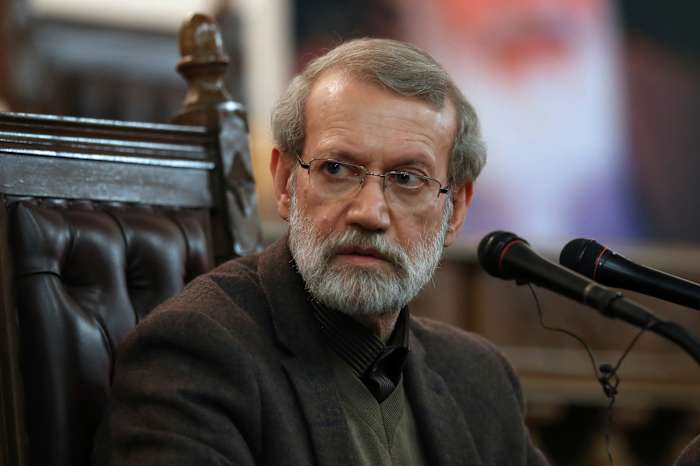
Ali Larijani was never meant to be a ghost. For decades, he was the face of the Iranian establishment—polished, philosophical, and profoundly academic. He was the man who quoted Kant while negotiating nuclear centrifuges. But in the final chapters of his life, the public intellectual retreated into the profound depths of the security state. He became the "shadow commander," the figure whispered to be the true hand on the tiller of the Iranian war machine since the current regional conflagration ignited.
His death is not merely a data point in a casualty list. It is the severing of a neural pathway. To understand why this matters, one must look past the debris and into the intricate, often fragile web of power that keeps a revolutionary state functioning during a total war.
The Philosopher with a Sword
Imagine a man who spends his mornings debating the nuances of Western metaphysics and his afternoons mapping out the logistics of ballistic missile transfers. That was the duality of Larijani. Unlike the rugged, populist charisma of the late Qasem Soleimani, Larijani operated with a cold, Cartesian logic. He didn't need the adulation of the trenches. He needed the gears of the bureaucracy to turn.
When the war began, the traditional hierarchies of the Iranian state shifted. Power in Tehran is often a fluid, amorphous thing, pooling wherever the Supreme Leader places his absolute trust. Reports from within the diplomatic and intelligence circles suggested that Larijani had moved from the periphery of "advisor" to the center of "executor." He wasn't just suggesting policy. He was running the war.
This shift was a necessity born of crisis. In a high-stakes conflict, a state cannot rely solely on the fervor of its generals. It needs a grand strategist—someone who can bridge the gap between the religious ideological core and the brutal, practical requirements of a modern proxy war. Larijani was the bridge.
The Invisible Stakes of a Targeted Strike
When an operative of this magnitude is removed, the immediate reaction is to count the broken concrete. But the real damage is cognitive.
Consider the "institutional memory" of a conflict. Larijani held the private cell phone numbers of every major power broker from Beirut to Baghdad. He knew which local commanders could be bought with cash and which required the currency of religious validation. He understood the specific breaking points of his adversaries.
When a missile finds a target like Larijani, that entire library of human intelligence and personal rapport vanishes in a heartbeat. The successor—whoever they may be—starts at a deficit. They inherit the files, but they don't inherit the nuances of a twenty-year relationship. They don't know the specific tone of voice that makes a militia leader in the Levant fall into line.
The strike was a message written in fire. It told the Iranian leadership that their most sophisticated minds were no longer out of reach. It suggested that the "shadow" they operated in had become transparent.
The Human Cost of a Cold Calculation
Behind the geopolitical chess moves, there is the raw, uncomfortable reality of the human element. Larijani was part of a dynastic political family, a clan that had weathered every storm since the 1979 revolution. His removal from the board is a psychic blow to the elite in Tehran. It creates a vacuum of paranoia.
In the corridors of power, the question is no longer "How do we win?" but "Who told them where he was?"
Paranoia is a corrosive force. It slows down decision-making. It makes commanders hesitate before meeting in person. It turns allies into suspects. For a country managed by a tight-knit circle of veterans, the loss of one of their most brilliant—and most loyal—sons is a trauma that transcends politics.
The Friction of Succession
Nature abhors a vacuum, and so does a military command structure. But filling Larijani’s shoes isn't as simple as checking a resume.
Iran’s strategy has always relied on a blend of formal state power and informal network building. Larijani was the master of the informal. He could walk into a room of diplomats and speak the language of international law, then walk into a room of revolutionary guards and speak the language of martyrdom.
Without him, the friction increases. The diplomats and the generals may find themselves speaking different languages again, without a translator to harmonize their goals. This friction is where mistakes happen. It is where miscalculations lead to escalations that no one truly wants but no one knows how to stop.
The Weight of the Aftermath
The debris in Damascus will eventually be cleared. A new building might even rise in its place. But the architecture of the Iranian war effort has been fundamentally altered.
The world often views these conflicts through the lens of hardware—drones, interceptors, and tonnage. We forget that the hardware is steered by human will and human intellect. Ali Larijani was the intellect. He was the one who calculated the risks, who weighed the cost of every drone launch against the benefit of every diplomatic overture.
His absence is a silence that will ring out across the region for months. It is the sound of a master clockmaker being removed from a room full of ticking gears. The clocks might keep running for a while on momentum, but eventually, they will begin to drift.
The sun sets over the Syrian desert, casting long, distorted shadows over a landscape that has seen too many architects of war come and go. In the end, the most powerful men are often the ones we never see until the moment they disappear. The shadow has been lifted, and in the harsh light of the morning, the path forward looks more jagged and uncertain than ever before.
The man is gone. The machine remains. But the machine is now missing its most essential operator, and the world is waiting to see if it can still find its way in the dark.