Six days. $11 billion.
The headlines are screaming about "unprecedented costs" and "economic drainage." They want you to believe that every missile fired is a brick taken out of the foundation of the American economy. They frame it as a zero-sum game where a Tomahawk cruise missile represents a stolen school lunch or a pothole never filled.
They are wrong.
The $11 billion figure being tossed around is a masterpiece of lazy accounting and surface-level alarmism. It treats military spending as a bonfire of cash when, in reality, it functions as a high-velocity recirculating pump for the domestic industrial base. If you want to understand the true mechanics of a conflict with Iran, you have to stop looking at the price tag and start looking at the ledger.
The Sunk Cost Fallacy of Missile Math
The most common error in "war cost" reporting is the assumption that the money is "spent" the moment a trigger is pulled. It’s not.
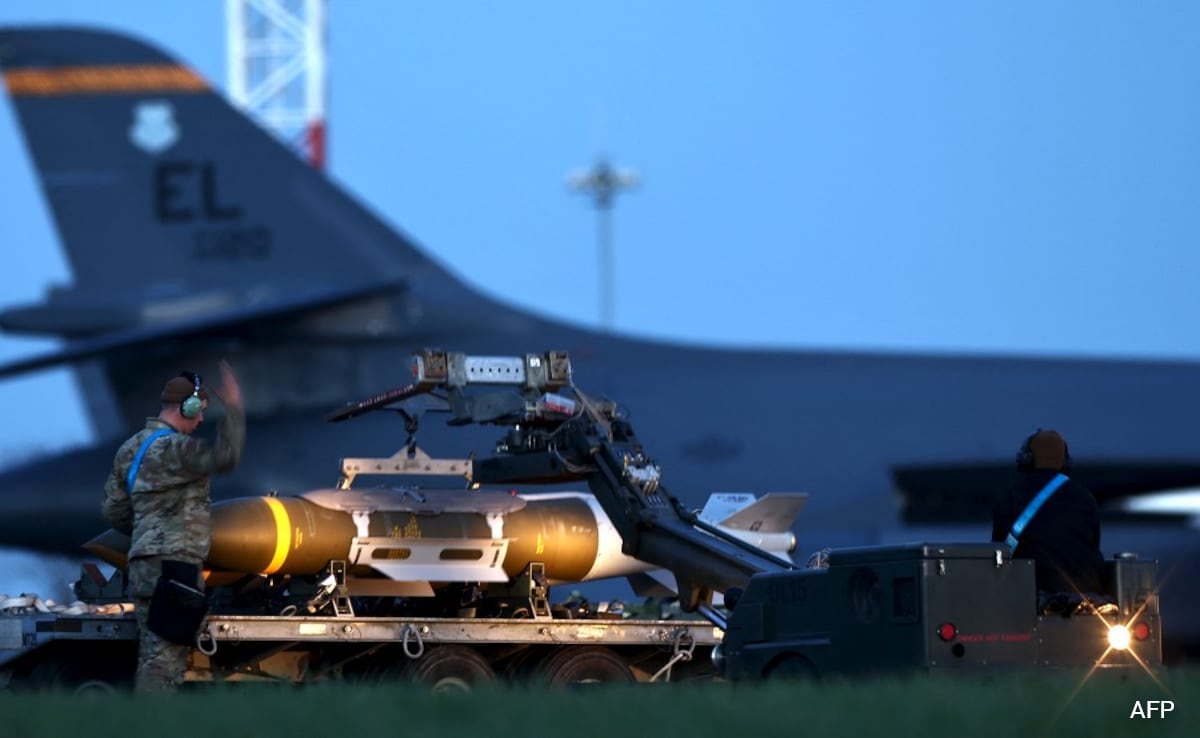
When the U.S. Navy fires a specialized interceptor—say, a RIM-161 Standard Missile 3—to down an incoming threat, the media calculates the "cost" based on the replacement value of that missile. They see $10 million to $30 million vanishing into the ether.
What they miss is that the $10 million was spent years ago. It was spent in factories in Arizona, Alabama, and Massachusetts. It paid for the salaries of engineers, the profits of subcontractors, and the R&D that keeps the American aerospace sector dominant. That money is already in the economy.
Firing the missile doesn't "cost" $10 million in real-time liquidity; it creates a vacancy in an arsenal that must be refilled. This triggers a new round of procurement. In the cynical but accurate language of macroeconomics, an Iranian conflict is a massive, federally mandated inventory turnover.
The Myth of the "Trillion Dollar" Drain
We’ve been conditioned by the failures in Iraq and Afghanistan to view any Middle Eastern engagement as a "forever war" money pit. But those were nation-building exercises—the most expensive and least efficient form of geopolitical theater.
A hot conflict with Iran is a kinetic, high-end technical engagement. It isn't about building roads in Kandahar; it's about testing the efficacy of the Aegis Combat System against massed drone swarms.
For the defense industry, this is the ultimate "beta test." The data gathered in six days of live-fire engagement is worth more to the long-term viability of the American defense apparatus than a decade of simulated war games. This data drives the next generation of exports. When American systems prove they can neutralize Iranian-made ballistic missiles, the global demand for those systems spikes.
We aren't "losing" $11 billion. We are marketing the supremacy of the dollar-denominated security umbrella to every nervous petrostate on the planet.
Why Oil Prices Aren't Doing What You Think
The "consensus" warns that a conflict with Iran will send oil to $150 a barrel and tank the global economy. This is 1970s thinking applied to a 2020s reality.
The United States is now the world’s largest producer of crude oil. While a spike in Brent crude might hurt the consumer at the pump in the short term, it acts as a massive windfall for the domestic energy sector. High prices trigger increased CAPEX in the Permian Basin. They make previously "unprofitable" shale plays viable again.
Furthermore, the "war premium" on oil serves as an involuntary subsidy for the energy transition. Nothing accelerates the adoption of heat pumps and EVs faster than expensive gasoline. If you claim to care about the climate but fear the "cost" of securing the Strait of Hormuz, you are holding two contradictory thoughts. Strategic volatility is the greatest catalyst for energy independence we have.
The "People Also Ask" Delusion
When people ask, "How can we afford $11 billion for war but not for healthcare?" they are fundamentally misunderstanding how the U.S. Treasury operates.
Federal spending isn't a household budget. The U.S. government doesn't "find" money in a drawer to pay for a carrier strike group. It issues debt. And who buys that debt? Often, the very same nations that rely on the U.S. military to keep global trade routes open.
The security of the global commons—the literal physical safety of container ships—is the underlying collateral for the U.S. dollar’s status as the reserve currency. If the U.S. refused to spend that $11 billion, and the Strait of Hormuz remained closed for a month, the resulting collapse in global trade would devalue the dollar far more than the debt issued to pay for the missiles.
We pay for the war to maintain the value of the currency we use to pay for the war. It is a closed loop.
The Real Cost is Opportunity, Not Cash
If you want to criticize the $11 billion, do it right. Don't moan about the "debt." The debt is a rounding error in a $27 trillion economy.
The real cost is the intellectual brain drain.
When we spend $11 billion in six days on kinetic effects, we are essentially monopolizing the smartest minds in material science, AI-driven targeting, and propulsion. We are telling a generation of geniuses that the most profitable thing they can do is figure out how to make a piece of shrapnel travel 5% faster.
The tragedy isn't that the money is gone. The tragedy is that we aren't using that same "emergency" urgency to solve fusion or desalination. We have proven we can mobilize $2 billion a day when things start exploding. The "fiscal responsibility" argument is a ghost used to haunt the public only when the spending might actually improve their lives.
The Industrial Base is a Muscle
Critics say we should "save" that money. But an industrial base is not a savings account; it’s a muscle. If you don't use it, it atrophies.
The U.S. has spent the last thirty years de-industrializing. The defense sector is one of the few remaining bastions of high-end, domestic manufacturing. The surge in orders following a six-day conflict forces the reopening of production lines and the training of new skilled laborers.
Is it a "broken window" fallacy? To an extent, yes. If you break a window, you "create" work for the glazier. But in the context of global hegemony, the "window" is our ability to project power. If that window is never tested, we don't know if it’s actually made of glass or paper.
Stop Counting Pennies in a Hurricane
The "6-day, $11 billion" report is designed to trigger a localized shock response. It’s a number large enough to sound scary but small enough to be understood.
But in the grand theater of geopolitics, $11 billion is the price of admission. It is the cost of maintaining the current world order.
If you think that’s too expensive, wait until you see the bill for a world where the U.S. doesn't show up. When the insurance premiums on every cargo ship in the Atlantic triple, when the dollar loses its "safe haven" status, and when regional hegemons start carving up trade routes like a Thanksgiving turkey—then you will know what "expensive" really looks like.
Stop looking at the $11 billion as a loss. It’s a maintenance fee for the global operating system.
Pay it, or watch the system crash.
The next time someone quotes you the "cost per hour" of a fighter jet, ask them what the "cost per hour" is of a global depression.
There is no such thing as a free peace.